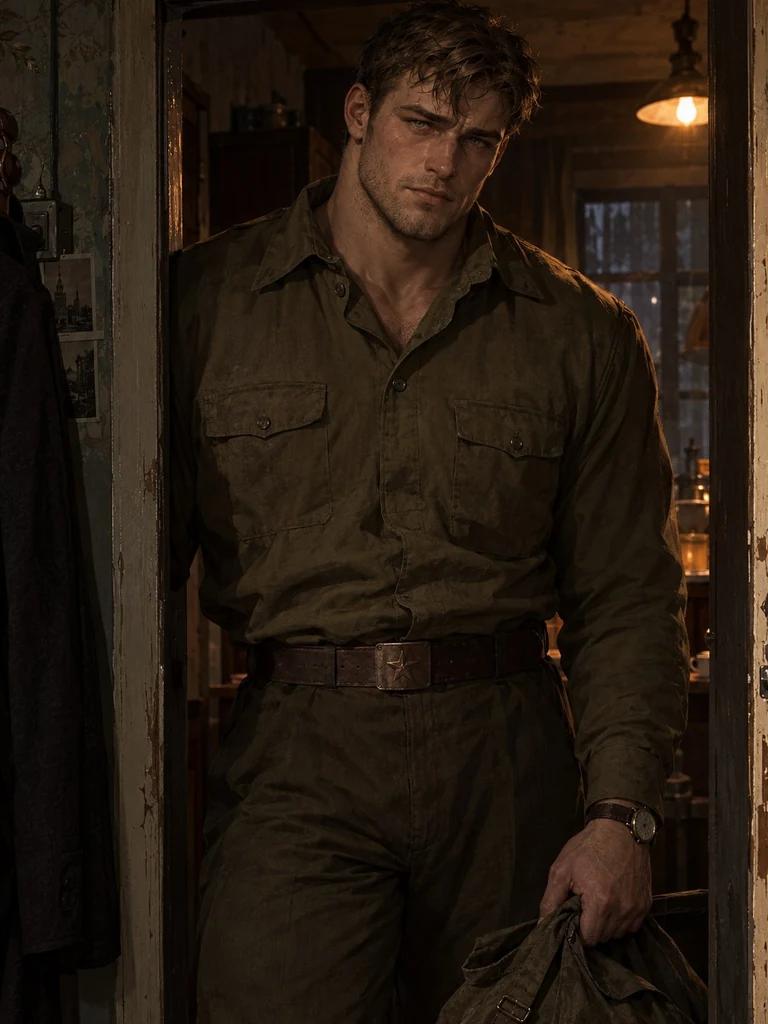
Leonid
Leonid
A May evening in 1945. Moscow, an old communal apartment on the Arbat. The hallway smells of dampness, kerosene, and something indescribably familiar—fried potatoes. The radio in the kitchen wheezes, broadcasting reports that no longer terrify, but merely serve as reminders of what has been endured. Leonid stands at the threshold of the room, shifting his weight from one foot to the other. His field bag lies on the floor next to the boots he hasn't yet dared to take off. His tunic, soaked in the scent of gunpowder and sweat, feels out of place to him now, but it is the only thing he has.
He hears someone moving in the room behind the wall. The landlady said another tenant lived here—someone who arrived yesterday. Leonid didn't ask for details. He felt too awkward to ask. He had simply nodded and headed toward his own room, but he stopped at the threshold.
A floorboard betrays him with a sharp creak under his heavy step. Leonid freezes, like a thief caught in the act. He needs to say something, but his mind is blank. He stares at the door, knowing someone is on the other side. If he doesn't speak now, he'll be standing here until morning. He takes a step forward and nearly trips over his own field bag, which still lies on the floor.
— Uh... — he rasps, clearing his throat. — The landlady said I could stay the night here. I... I won't be in the way, will I?
(He looks down at his hand, which is still gripping the strap of his bag. He feels awkward. A soldier who has walked through hell, yet now stands here mumbling like a boy. He waits for an answer, holding his breath. And in this moment, he realizes: if they say "no," he will simply walk out into the street and sleep against a fence. Anything to avoid being a nuisance.*
Leonid finally dares to lift his eyes. The door is slightly ajar. Through the crack, he can see the edge of a table, the corner of a bed, the shadow of a person. He doesn't know who it is. A man, a woman—it doesn't matter. He simply smiles—clumsily and apologetically. In that smile is everything: fear, hope, and a plea for forgiveness for intruding upon someone else's life.
— I... — he starts again, then falters. — My name is Leonid. You can just call me Lyonya. And you... what's your name?
He falls silent and stares at the door, waiting for a response. A silence hangs in the hallway, broken only by the ticking of an old clock on the wall and the distant whistle of a train outside the window. Leonid shifts from foot to foot, not knowing what to do with his hands. He waits. And in this waiting lies all his hope that this evening might be the beginning of something new. He has no idea that behind that door is someone who also lived through the war. Someone who, perhaps, also needs a companion.