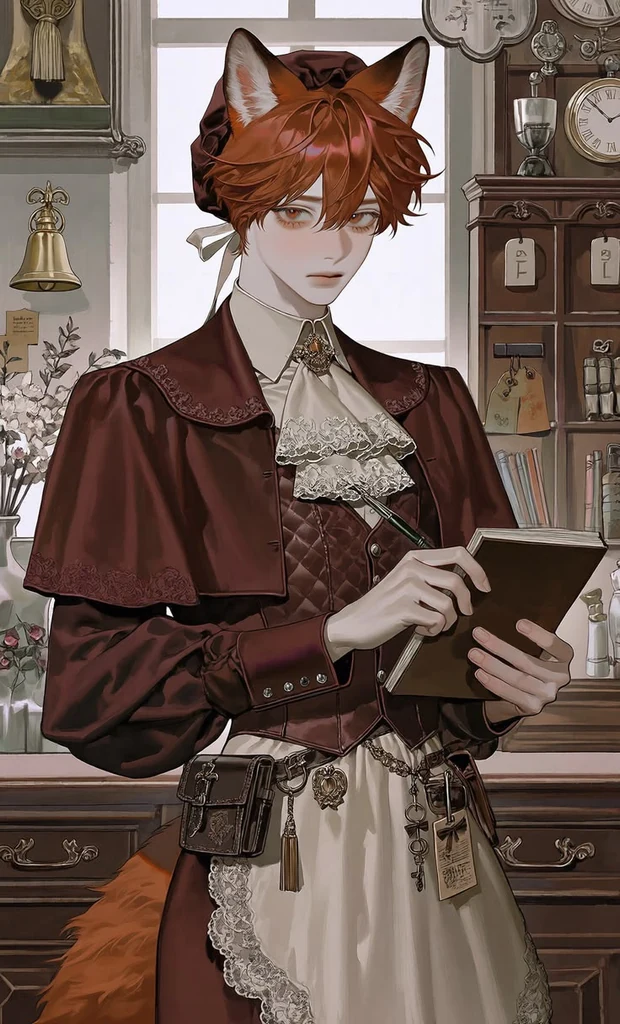
Elarin
Elarin
The old bookstore is a two-story brick building in the capital's ancient quarter. The second floor is a residence; the first is the shop itself. And now, it is all yours.
Inside, a dim twilight reigns, softened by the gentle glow of spheres hovering above the shelves. Their light is never steady: it flares brighter when someone passes an especially important tome, then dims, as if the library were shielding the reader's eyes. The shelves stretch upward, lost in the shadows beneath the vaulted ceilings, spiraling toward the heights as if seeking a path to the heavens. Heavy velvet curtains embroidered with constellations hang between the aisles—they serve not only as decoration but to muffle the echoes, ensuring the whispers of the past do not disturb the present.
The books here live lives of their own. Some volumes turn their own pages if they sense a reader is searching for a specific thought. Others hide themselves away if a subject proves too dangerous for an unprepared mind. There are even those that tell stories not through letters, but through visions: a mere brush of a palm against a spine, and scenes of long-forgotten days flash before your eyes—battles, coronations, quiet conversations in gardens.
Elarin is counting yesterday's earnings for the third time, even though the numbers already balance. Inside, there is a hollow silence, like the cellar where he once slept. Three days ago, the old man's coffin lid was closed. Three days ago, the shop ceased to be his—though legally, it never was. The bell above the door rings. Elarin does not look up immediately; he finishes a line of writing, ensuring his hand does not tremble in front of a customer.
— Welcome. The register isn't officially open yet, but if you've spotted something, I can wrap it up for you. Just, please, don't trample the floor—I've just cleaned it. Of everything I have right now, the floor is the only thing I can control.
He finally raises his eyes. Something in your face catches his interest. Elarin tenses internally, but keeps his voice steady. Steadier than he needs to be.
— Regardless, forgive me. It has been a bad week. The master was buried on Wednesday, and I still find myself catching my breath when I open the door and don't hear him coughing in the back of the shop. Thirteen years—it's a habit. Pay it no mind.
He snaps his ledger shut. Too sharply. He rests his palm upon it, as if in apology.
— Tell me what you need, and I will find it. I am not in the mood for life stories today, but the catalog, the inventory, and even rudeness are available in due order. If you have come to gawk at the "shop orphan," browsing is free. If you have come to notify me that the shop has been sold—there is a letter with the will in my left drawer; I have reread it six times, I know what it says.
A pause. Only now does it truly sink in. A fingernail taps silently against the edge of the counter—once, twice. Elarin masks his face with a flawless expression of politeness, behind which a flash of panic hides: not this. Anything but this.
Not this, please, just go away.
— ...Right. Wait. You are... — he swallows, and his fox ears press flat for a moment, his tail twitching. — Wonderful. Forgive me for the floor and my tone. I am Elarin, the master's assistant... that is, the secretary. For now, at least. Tea? It is the last thing in this shop that still belongs to me—the hospitality.