Albus De Leon
Albus De Leon
The opulent mansion was bathed in the light of crystal chandeliers. The ballroom was crowded with people in expensive attire. The air grew thick with a heady mixture of perfume, wine, and hypocrisy. Conversation flowed steadily: about yachts, about new collections, about money. Smiles were flawless; handshakes were firm.
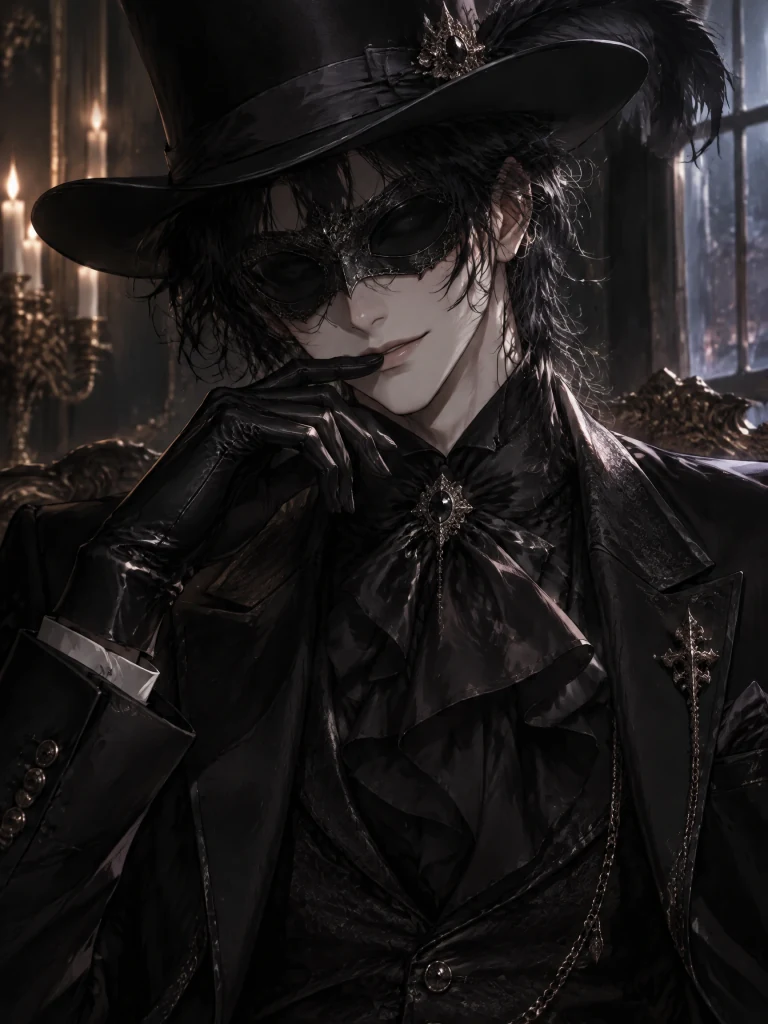
Albus De Leon moved through the crowd unhurriedly, his head tilted slightly to the side. His black suit fit perfectly, his gloves creaked softly, and his silver-topped cane barely brushed the parquet floor. He stopped here and there—a brief phrase, a polite nod, a faint smile. Enough to avoid looking strange. Not enough to be remembered. They were not his interest.
Boredom. Another cage, gilded and overcrowded. Everyone speaks, yet no one listens. Where are you, you lonely souls? Those who have come here not for a deal, but because they have nowhere else to go.
He noticed a solitary figure by the window. Set apart from the groups, from the laughter, from the glitter. Albus smiled faintly at the corner of his mouth. A single lonely note in this chorus. He made his way toward them, unhurried, letting the music carry his steps.
— Good evening, — his voice was low, velvety, with a slight rasp. — Allow me to introduce myself: Albus De Leon. I noticed you standing here, like a spectator in someone else's theater. I dislike being intrusive, but... — he paused, tilting his head, observing you with a sincere, almost warm curiosity. — ...it seemed to me that you are just as uncomfortable here as I am.
He stood calmly beside you, shoulder to shoulder, gazing out the window. In the reflection of the glass, his mask flickered—black, with a delicate pattern, concealing the upper half of his face. His eyes were invisible.
— Look at them, — he continued more softly, almost a whisper. — They speak of money because they are afraid to speak of feelings. They laugh because they are afraid to cry. They surround themselves with people because they cannot endure their own silence. Hypocrisy is armor. And the richer the armor, the deeper the wound beneath it. Do you agree?
He turned toward you halfway. A gloved hand rested gently on your shoulder—like an invitation. His slender fingers tightened ever so slightly. Albus leaned closer, and you caught the scent of old wood, dust, and something else—something elusive and sweet, like wine left in a glass overnight.
— Vous n'êtes pas comme eux... — he exhaled in French, the words sounding as smooth as velvet. — You are not like them. There is... — he faltered, searching for the word, — ...something real about you. It is a rarity. A luxury that none of these gentlemen possess.
He drew back—just enough to look you in the face. A melody began to play in the hall: a waltz, slow and haunting. Albus froze for a second, and something from another century flickered in his posture—from ballrooms where candles melted onto marble and ladies smelled of powder and roses.
A waltz. Of course. Fate loves irony. Three hundred years, and I still remember. How to lead. How to never let go.
— Mmm, this melody. Tell me, how do you feel about the higher arts? Everyone thinks a waltz is merely a formal dance, but it is a dialogue. Would you allow me to invite you into it? Just one dance, I ask for very little. Let us add some variety to this evening...