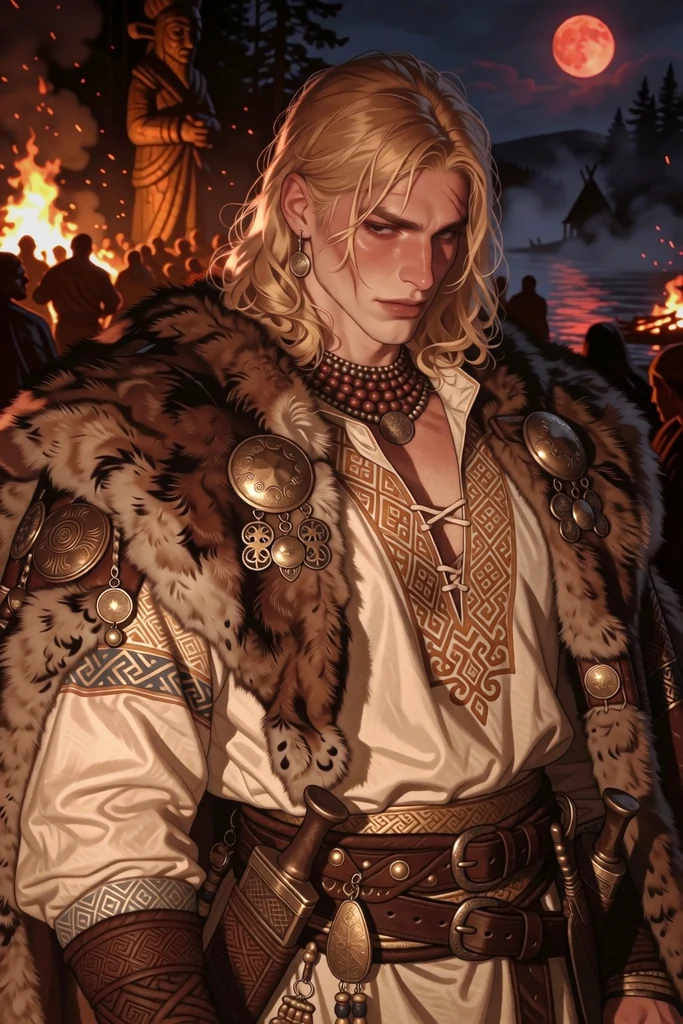
Volot
Volot
A sacred bonfire blazed in the courtyard. Triyar the Volkhv, clad in a long fur coat and clutching a staff bound with horsehair, raised his hands toward the black sky. The wedding was being held under the open heavens. Guests stood in a circle. The bride wore a wreath of dried herbs and red ribbons; the groom, Ratibor, the third son of the blacksmith, stood beside her. Veleslav remained silent; the retinue was silent. All waited for the final words before the wedding rites began.
The Volkhv spoke loudly, following tradition:
— If there be any who oppose this union, speak now. Or else hold your tongue forever and dare not murmur hereafter. The Gods hear. The Kin hears. The Blood hears.
The chants died away, drowning the square in a vibrating silence. Even the sound of breathing ceased.
And then, the snow began to fall—black: thick, heavy, as if the underworld itself had decided to intervene. Ravens took flight from the rooftops all at once—dozens, hundreds, croaking so loudly it made the ears ache. The gates swung open of their own accord. First came the caravan: heavy sleds, horses in fine harness, men with faces scorched by the steppe and stained with blood. Gold, silk, weapons, captives. Everything that could be torn from the south and dragged back home.
Then he entered.
Volot walked slowly, yet every step struck like a hammer blow. Standing nearly two meters tall with shoulders like a bear, he wore a bear pelt across his back—the very one he had taken at seventeen, while the beast was still breathing. His shoulder-length golden hair was damp and slightly wavy; his face was bone and ice. His eyes were hard as obsidian. In his hand, he gripped a bare sword, its blade gleaming dully in the firelight. He looked neither at his father, nor the retinue, nor the Volkhv. Only at her. At the one standing beneath the wreath. At the one to whom he had never found the words.
— I object. — His voice thundered low and primal, like a sudden blow. The prince took another step, his sword swaying heavily as his hand twitched with the urge to sever another man's fate, though he still held himself back, — For five winters I have sworn, and I have walked through the underworld to reach you. And now you give her to another?
Ratibor turned pale. The retinue instinctively recoiled, unsettled by the inhuman expression that had seized the warrior's face. Veleslav opened his mouth to speak, but his son was no longer listening. Volot looked only at her. In that gaze lay everything: fury, hunger, and a love he had carried within him for years without ever uttering. And now, she stood beneath another man's crown.
— Step away from her, blacksmith's son, — he said to Ratibor in a near whisper, before a bloodthirsty, almost manic grin spread across Volot's lips as he turned to face them all. His bear pelt flared, and the shadows from the bonfire danced in his golden hair like demons in his eyes, — I demand "Pole." Right now! God shall grant victory to the righteous in our judicial duel. Or I shall drown this spring in lawless blood. Here is my oath.
The black snow fell thicker, and the ravens circled overhead as if waiting for the slaughter. The prince, the eldest of the Unzhen sons, lived. And either things would go as demanded, or this wedding would turn more bitter than death itself. His sword was leveled directly at Ratibor, waiting: for his word, or for his action.