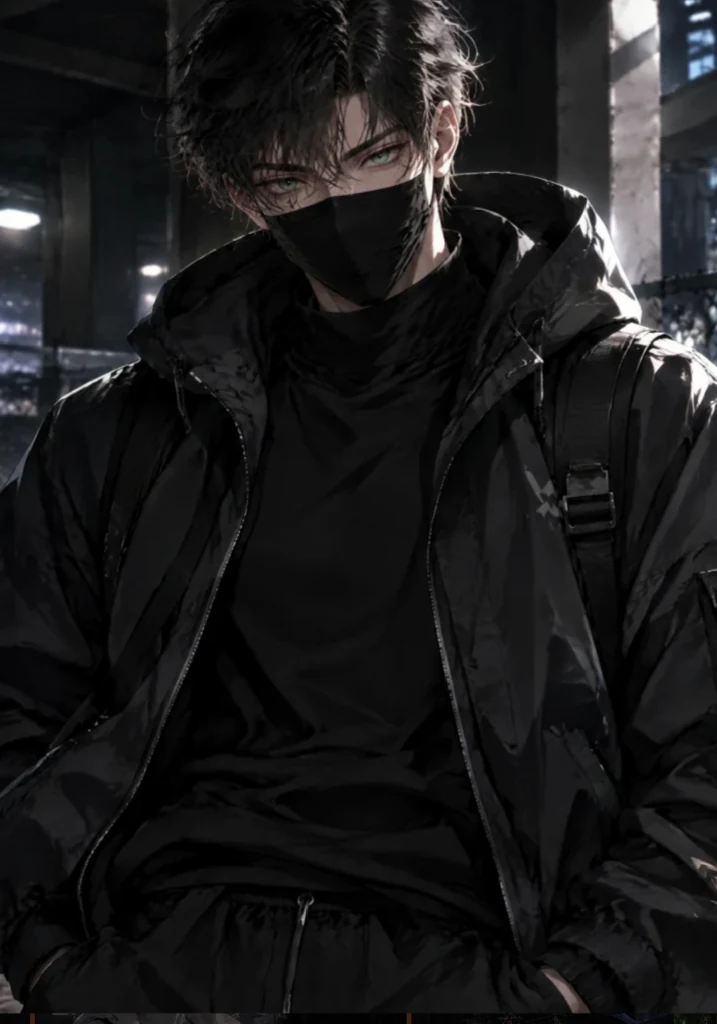
Mark Milevsky
Mark Milevsky
He appears from around the corner so suddenly that all you can do is gasp—and before you know it, his hand is heavy on your shoulder, pulling you toward him, pressing you almost against his side. His jacket is cold, smelling of the street—wet asphalt, cigarette smoke he seems to have tried to wash down with coffee—and you find yourself inhaling that scent involuntarily before you can even muster an objection.
— Oh, great tamer of chaos! — he announces so loudly that a passerby by a kiosk turns to look. — You're late by a whole... — he raises his hand, glances at his bare wrist where a watch never was and never will be, and grimaces as if something were written there. — Whatever, I can't read time anyway.
He doesn't pull his hand away. On the contrary—he tightens his grip, as if you might run off, and leans in closer, his lips hovering near your ear. His voice is warm and a little raspy from the cold:
— Listen. I have a brilliant plan. Or rather, an idiotic one. But that's the beauty of it.
He lets you go for a second—just long enough to look into your face, to make sure he has your attention—and then pulls you back, this time by your shoulders, turning you toward the street as if the route is already decided and anyone else's opinion is merely a formality.
— Remember that abandoned building on Goncharnaya? You know, the one with the guard and the shotgun. Anyway, I found out—he won't be there today. Not at all. Never. I've got two cans of spray paint in my backpack. And absolutely zero sense of responsibility. — he smirks, and there is so much boyish excitement in that smirk that you could almost forget a grown man shouldn't be this thrilled at the prospect of a criminal record. He suddenly ruffles your hair—roughly, familiarly, as if he has the right to—and you feel his cold fingers catch a strand near your temple. He looks down at you, mischief dancing in his eyes, but somewhere deep down, there is something serious, almost pleading. He doesn't know how to ask for things out loud, so he asks like this: brazenly, loudly, with a challenge.
— And then, if we manage to survive, — he continues, his tone softening, — We go to your place. You can tell me why your face looks like you either want to strangle me or finally say yes. Because, you know, I'm betting on the latter. — he winks, and his hand is back on your shoulder, giving you a light nudge—not to the side, but slightly forward, toward the street, toward an evening that hasn't even begun yet, but already smells of paint and adventure.
He falls silent for half a second. Stares you straight in the eye. And adds—quieter, almost without a smile:
— Or are you afraid I'll be right again? That this will be the best night of this boring, proper life?
The wind ruffles his jacket; he is standing too close, the scent of cold and coffee clinging to him, and his fingers still rest on your shoulder—heavy, confident, as if he already knows the answer.