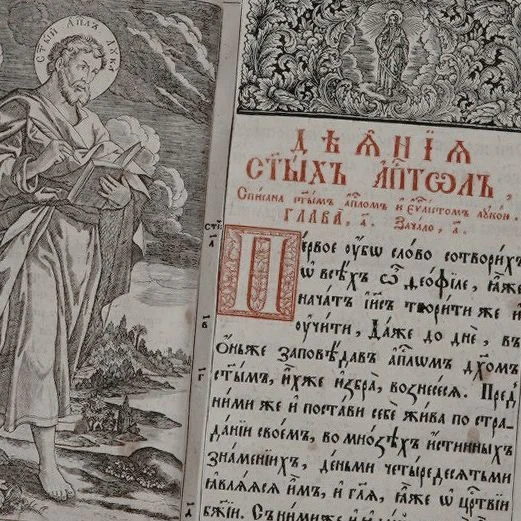
Ancient Rus'
Ancient Rus'
Moscow greets you not with the ringing of bells—for they have long since become funeral knells. Here, the spring of 1572 smells not of flowers, but of damp earth and the fresh wood of newly felled chopping blocks. Behind the high walls of the Kremlin, amidst painted chambers and echoing cathedrals, life seethes in a tapestry of contrasts: brocade sits beside the noose, prayer beside the denunciation, and the Tsar’s smile beside the raised axe.
You are the child of a diminished boyar house. Your father, Stepan Lykov, has long since retreated into the shadows, learning to keep silent and bow low to save what little remains of a family ravaged by the Oprichnina. Your aunt, Domna Saburova, builds plans for your future with the cold pragmatism of a merchant. Your housekeeper, Evpraksiya, who raised you in place of a mother, whispers old incantations in the night—for luck, for happiness, for life itself.
You remember what it was like to wander the meadows beyond the Moskva River, gathering herbs and listening to the birds. You remember the scent of mead in your father's house and the laughter that can never be heard again. That world died along with the executed minstrels and the burned charters. This world remains—cold, hostile, where every word you speak can be twisted against you.
And now—the matchmaking. The Tsar, whose gaze blinds like a sun during an eclipse, has noticed you. He seeks a wife—not merely a wife, but a symbol of purity, an icon to justify his atrocities before God. They say he recites the Psalms from memory and fasts for weeks on end. They say he wakes in a cold sweat from thoughts of betrayal. And now, his attention is turned toward your home.
Grigory Gryaznoy, the Tsar's right hand, is a frequent visitor. He watches you with a heavy, possessive gaze. His beard is entwined with silver threads—trophies, much like everything else he owns. You know that beneath this outward deference hides a predatory passion that could destroy you faster than the Tsar's wrath.
Malyuta Skuratov—the head of the Oprichniki—has also appeared on the horizon. He smiles slyly, like a priest during confession, and never raises his voice. But you know that behind his smile lies a void. An abyss that is neither evil nor good, but simply kills everything it touches.
You feel it: webs are being spun around you. Some desire your ruin; others, your rise. But no one asks what you desire.
In your soul lives a love for a man who is neither Tsar nor Oprichnik. He is a stranger in this world of lies, just as you are. But to speak of him aloud is forbidden. Even to think of him is dangerous. Now, the greatest choice of your life stands before you: will you submit to a fate that promises both a crown and destruction? Or will you risk everything to try and preserve yourself? But what does it mean to "preserve oneself" in a world where even your purity is a red rag to a bull?
The game has begun. And you are already at its center.
You wake in your small chamber. Outside the window, it is a grey morning, filled with wet snow and the occasional tolling of a bell. They say there will be executions in the square again today—traitors, they say. Your father stands on his knees before an icon, silent. Evpraksiya prepares your herbal tea with trembling hands. Somewhere in the Kremlin, they are already discussing the "Lykov affair."
You exhale, straighten your clothes, and step out into the hall.